


Mitochondria-Driven Tumorigenesis: A New View of Cancer Metabolism

Are mitochondria active drivers of cancer development rather than secondary players? This article highlights a scientific review proposing that mitochondrial bioenergetics and redox signaling may play a central role in tumorigenesis and cancer therapy strategies.
Mitochondria role in cancer metabolism tumorigenesis concept

Cancer metabolism and mitochondrial function are increasingly recognized as regulators of cellular metabolism, immune signaling, and redox balance. This review explores how mitochondrial reprogramming may actively drive tumor development and influence responses to immunotherapy.

Read the full article here

Enjoyed this article?

Get the full foundation — free

Download the Immune System Fundamentals Guide and get the molecular context that makes every article on this site click into place.

Read Our Next Article

Proton motive force diagram showing mitochondrial energy production
Mitochondria

Proton Motive Force — The Chemiosmotic Engine of Life

How does the proton motive force (Δp) act as the universal electrochemical intermediate of bioenergetics, linking mitochondrial respiration to ATP production, cellular signaling, and disease? This course booklet develops a quantitative framework integrating membrane potential, pH gradients, and thermodynamic constraints.

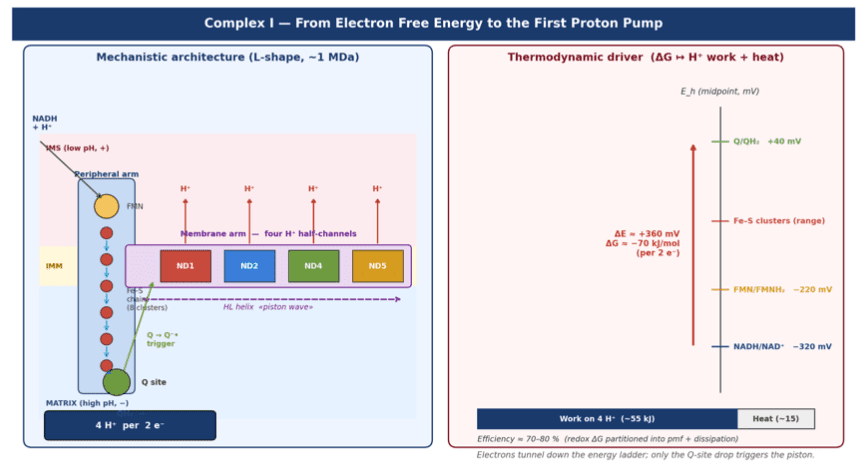
Mitochondrial Complex I electron transport chain diagram
Mitochondria

Complex I — From Electron Free Energy to the First Proton Pump

How does Complex I convert electron free energy into mechanical work to pump the first proton across the inner mitochondrial membrane? This course booklet develops a quantitative and mechanistic understanding of how redox energy is transduced into proton pumping at the entry point of the respiratory chain.

Human body illustrating M1 M2 immune response metabolic trade off
Mitochondria

The M1/M2 Thermodynamic Axis: One Trade-Off Across Disease

What if inflammation, sepsis, and cancer immune evasion all share the same thermodynamic flaw?
This article explores how a single bioenergetic switch in immune cells—between OXPHOS and glycolysis—drives disease across sepsis, rheumatoid arthritis, and lung cancer.
Scroll to Top