



A rational case for understanding the epigenetic clock and its role in healthspan
You inherited your genes. You did not inherit your future. The same DNA you carry from birth to old age is read very differently depending on how you live. That reading layer — the chemical script that decides which genes are switched on or off — is called your epigenome. It is rewritten every day by what you eat, how you move, how you sleep, how you handle stress, and what you breathe. That is why identical twins, who share exactly the same genome, often age very differently. Same code; different choices; different biology.
A measurable trace of how you live
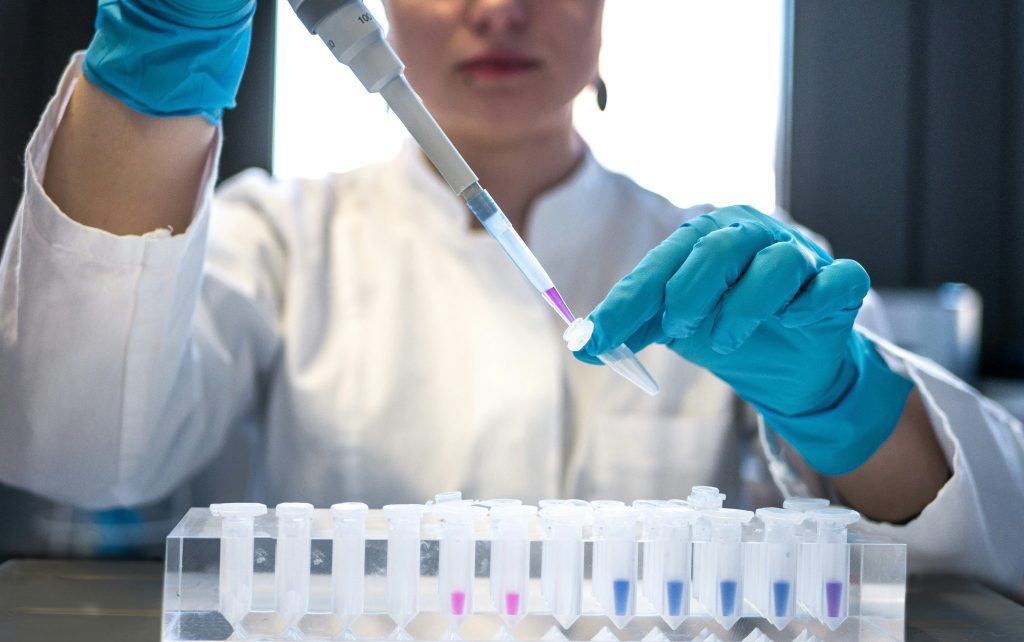
Modern science can now read this layer. By measuring tiny chemical marks (methylation) on your DNA, we estimate your biological age — how old your body actually behaves, regardless of the date on your passport. Hundreds of studies show that biological age predicts your future risk of heart disease, type 2 diabetes, cognitive decline and frailty more accurately than chronological age. It is, in effect, a forward-looking dashboard of your healthspan. GENOWME’s Swiss epigenetic clock measures eleven such markers, calibrated on the population with the highest life expectancy in Europe, plus a stress signature across your metabolic, immune, cardiovascular and neuroendocrine systems — capturing the cumulative wear of chronic stress.
Five levers that move the clock
Across randomized trials, the most effective interventions are also the most accessible:
- Eat for your methylation. Mediterranean and plant-rich patterns; polyphenols (green tea, olive oil, berries); folate, B12, choline, omega-3 fatty acids; minimal ultra-processed food.
- Move daily. Combined aerobic and strength training; reduce sedentary time. Even short walks lower epigenetic age acceleration.
- Protect your sleep. Seven to nine hours, consistent timing, morning light exposure, no late-night meals.
- Regulate stress. Meditation, breathwork, social connection. Chronic stress is biologically expensive — your epigenome records every bit of it.
- Avoid the obvious toxins. Tobacco, excess alcohol, polluted air. Their epigenetic signatures are unmistakable, and so is their reversal once exposure stops.
Why this changes preventive care
Conventional medicine waits for symptoms. By the time blood pressure, blood sugar or cholesterol cross the line, your biology has been drifting for ten to twenty years. Epigenetic measurement detects that drift early — and, crucially, it can be re- measured. After three to twelve months of a targeted lifestyle protocol, you can see whether your biology actually moved. “I should eat better and exercise more” becomes “my biology shifted from fifty-two to forty-nine — and here is what worked.”
An honest word
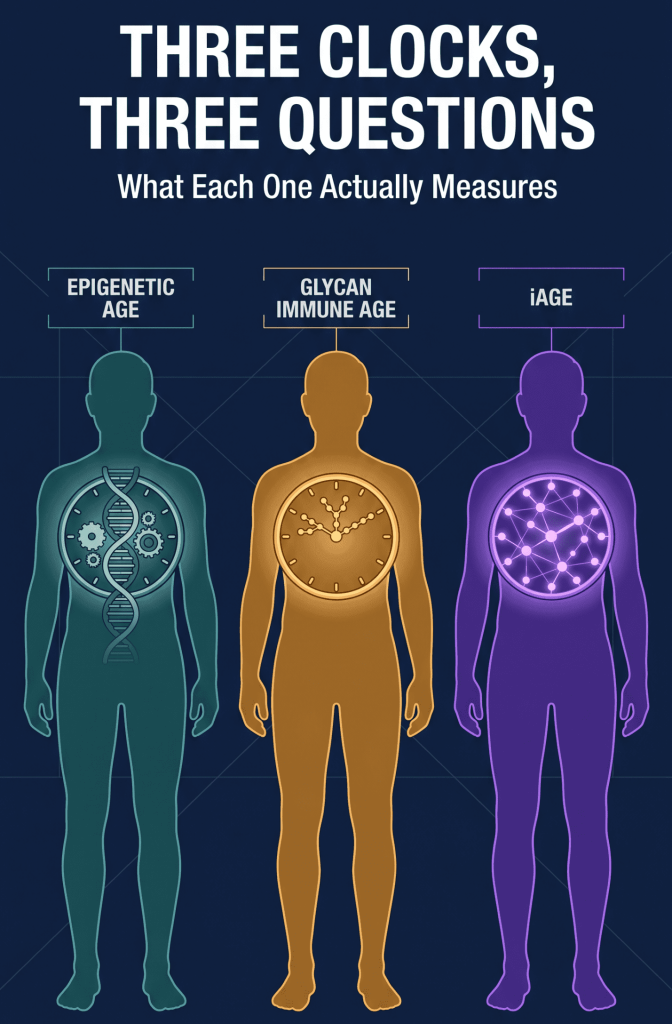
The epigenetic clock is not a crystal ball. It is a high-resolution mirror. Lifestyle interventions typically slow aging or shift it back by one to three years; they do not rejuvenate you to a younger self. Different clocks measure different things, and small changes between measurements should not be over-interpreted. But across dozens of randomized trials, the direction is consistent: structured nutrition, movement, sleep and stress regulation move the clock the right way.
Your genes are the score. Your daily choices conduct the performance. The fixed code of your DNA was given to you — the way it is read is a daily decision, written one methyl group at a time.
GENOWME — Genknowme SA, Lausanne · Patient briefing · Sources: Horvath 2018, Belsky 2022 (DunedinPACE), Lu 2019 (GrimAge), Fitzgerald 2021, Yaskolka Meir 2023 (DIRECT-PLUS), Olaso-Gonzalez 2026.